 EN
EN


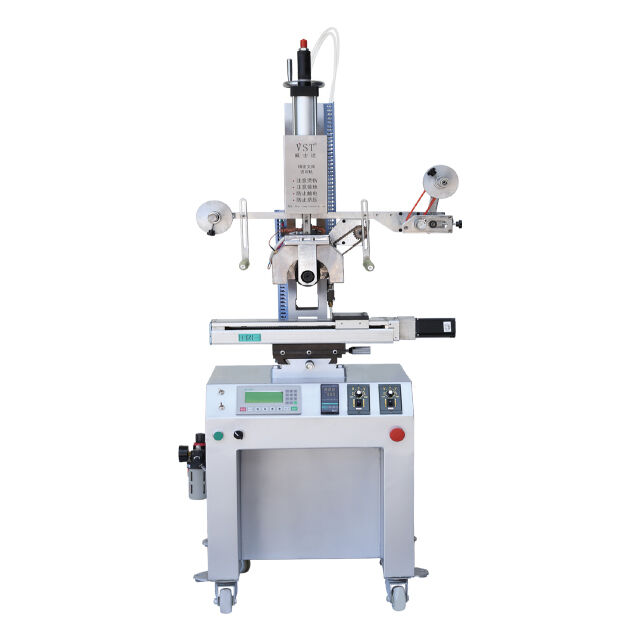
The packaging industry stands at a transformative crossroads where efficiency, sustainability, and visual appeal converge to redefine product presentation standards. In-mold labeling technology has emerged as a revolutionary approach that integrates decoration directly into the manufacturing process, eliminating secondary labeling operations while delivering superior durability and aesthetic consistency. As consumer expectations evolve and regulatory pressures intensify, manufacturers across food and beverage, personal care, and industrial sectors are increasingly adopting this advanced methodology to future-proof their packaging operations and maintain competitive differentiation in crowded marketplaces.
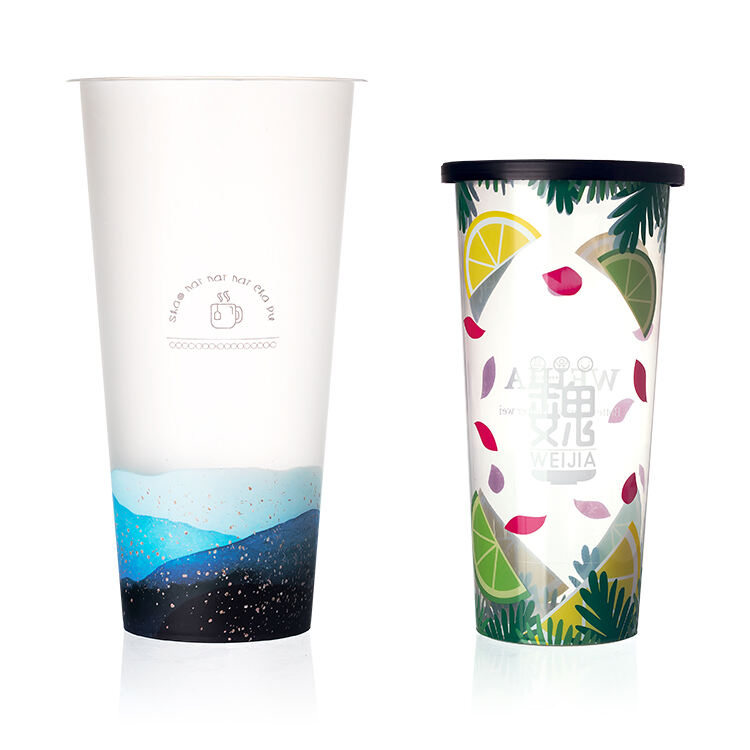
The trajectory of in-mold labeling technology reflects broader shifts in manufacturing philosophy, where integration and automation replace fragmented production stages. This packaging innovation addresses multiple industry pain points simultaneously—reducing labor costs, minimizing material waste, enhancing product protection, and enabling design complexity previously unattainable through conventional labeling methods. Understanding the emerging trends within this technology domain provides strategic insight for businesses evaluating next-generation packaging investments that align with both operational efficiency goals and evolving market demands for sustainable, high-performance container solutions.
Sustainable Material Innovation Driving Adoption
Bio-Based and Recycled Content Integration
The environmental imperative reshaping global packaging strategies has catalyzed significant advancements in the material science underlying in-mold labeling technology. Manufacturers now develop label films incorporating substantial percentages of post-consumer recycled content while maintaining the optical clarity and mechanical properties required for high-speed production environments. These recycled-content labels bond seamlessly with container substrates during the molding process, creating monolithic structures that simplify end-of-life recycling by eliminating material separation challenges inherent in pressure-sensitive label systems.
Beyond recycled materials, bio-based polymers derived from renewable feedstocks represent another frontier in sustainable in-mold labeling technology development. Polylactic acid and bio-polyethylene label films offer comparable performance to petroleum-based alternatives while reducing carbon footprints associated with raw material extraction and processing. The chemical compatibility between these bio-based labels and increasingly common bio-resin containers enables truly circular packaging systems where all components originate from renewable sources and decompose through industrial composting infrastructure, addressing both regulatory compliance requirements and consumer sustainability preferences.
Lightweighting Without Performance Compromise
Material efficiency gains represent a critical trend within in-mold labeling technology evolution, as thinner gauge label films deliver environmental and economic benefits simultaneously. Advanced polymer formulations now achieve the necessary stiffness and handling characteristics for automated feeding systems while reducing material thickness by thirty to forty percent compared to previous generation products. This lightweighting trend directly translates to reduced transportation emissions across supply chains and lower raw material consumption per unit produced, aligning with corporate sustainability targets while improving profit margins through material cost reduction.
The engineering challenge in lightweighting involves maintaining dimensional stability throughout the molding cycle, where extreme temperature variations and material flow dynamics can distort insufficiently robust label films. Recent innovations in polymer chain architecture and additive packages have resolved these technical barriers, enabling ultra-thin labels that resist wrinkling, tearing, and displacement during injection or blow molding operations. These advanced materials maintain registered graphics even on complex three-dimensional container geometries, proving that environmental responsibility and manufacturing precision represent complementary rather than competing objectives within modern in-mold labeling technology applications.
Digital Printing Integration Enabling Mass Customization
Variable Data and Short-Run Economics
The convergence of digital printing technologies with in-mold labeling technology has fundamentally altered the economics of packaging personalization and regional market adaptation. Traditional gravure and flexographic printing methods required substantial setup investments and minimum order quantities measured in tens of thousands of units, creating barriers for limited-edition products, test markets, and localized branding initiatives. Digital printing eliminates these constraints by enabling economical production runs as small as several hundred units while supporting complete graphic variation between sequential labels, opening new possibilities for promotional campaigns, serialization, and consumer engagement strategies.
Variable data printing capabilities integrated with in-mold labeling technology facilitate sophisticated track-and-trace implementations required by pharmaceutical serialization mandates and food safety traceability regulations. Each container receives a unique identifier encoded in scannable formats during the labeling process, creating permanent records resistant to tampering or environmental degradation. This integration of identification functionality directly into packaging structures eliminates supplemental labeling operations while ensuring data permanence throughout distribution chains and consumer usage cycles, addressing both regulatory compliance requirements and brand protection objectives through a single technological solution.
On-Demand Production and Inventory Optimization
Digital workflows combined with in-mold labeling technology enable just-in-time production strategies that minimize inventory carrying costs and obsolescence risks associated with packaging components. Brands can defer final decoration decisions until immediately before production runs, incorporating real-time market intelligence, promotional adjustments, or regulatory updates without discarding pre-printed label inventory. This flexibility proves particularly valuable in industries characterized by frequent formulation changes, seasonal variations, or regulatory volatility where traditional pre-printed label stocks frequently become obsolete before utilization.
The operational agility provided by digitally printed in-mold labeling technology extends beyond inventory optimization to encompass rapid market testing and consumer feedback incorporation. Product developers can evaluate multiple graphic treatments simultaneously across controlled test markets, gathering preference data before committing to extended production runs. This iterative approach reduces the financial risk associated with packaging redesigns while accelerating the innovation cycle, enabling brands to respond more dynamically to competitive pressures and shifting consumer preferences within compressed decision timeframes characteristic of contemporary market environments.
Enhanced Functionality Through Smart Label Integration
RFID and NFC Technology Embedding
The evolution of in-mold labeling technology increasingly incorporates electronic components that transform passive packaging into interactive information platforms. Radio frequency identification chips and near-field communication antennas embedded within label structures during the molding process create permanent electronic identities resistant to environmental exposure and physical handling damage. These embedded intelligence systems support applications ranging from automated inventory management in distribution centers to consumer authentication verification and post-purchase engagement through smartphone interactions, expanding packaging functionality far beyond traditional containment and protection roles.
The technical integration of electronic components within in-mold labeling technology requires careful attention to molding parameters and material selection to prevent thermal damage to sensitive circuitry during high-temperature processing cycles. Recent advances in heat-resistant chip packaging and strategic placement within label layer structures have resolved these challenges, enabling reliable component survival through injection molding temperatures exceeding two hundred degrees Celsius. This breakthrough facilitates cost-effective smart packaging deployment across high-volume applications where manual label application or secondary assembly operations would prove economically prohibitive, democratizing access to connected packaging capabilities previously limited to premium product categories.
Augmented Reality and Consumer Engagement
Visual markers and encoded patterns integrated into in-mold labeling technology graphics enable augmented reality experiences that bridge physical products with digital content ecosystems. Consumers scanning container graphics with mobile devices access instructional videos, ingredient sourcing narratives, recipe suggestions, or gamified brand experiences that deepen engagement beyond the initial purchase transaction. These interactive capabilities transform packaging from passive communication vehicles into dynamic marketing platforms that maintain consumer relationships throughout product lifecycle stages, generating valuable usage data while reinforcing brand positioning through memorable experiential touchpoints.
The permanence of graphics achieved through in-mold labeling technology proves particularly advantageous for augmented reality applications, as the scratch-resistant and fade-resistant properties ensure reliable marker recognition throughout extended product shelf lives and consumer usage periods. Unlike pressure-sensitive labels susceptible to edge lifting, moisture infiltration, or mechanical damage that compromise scanability, in-mold labels maintain graphic integrity under challenging conditions including refrigeration, outdoor exposure, and repeated handling. This durability ensures consistent augmented reality functionality regardless of distribution channel or end-use environment, supporting sophisticated consumer engagement strategies without concerns about technical reliability degradation over time.
Automation and Production Speed Optimization
Robotic Handling and Placement Systems
Modern in-mold labeling technology deployments increasingly leverage advanced robotic systems capable of precise label placement at production speeds exceeding sixty cycles per minute. These automated handling mechanisms utilize vision guidance systems and force feedback control to position labels with submillimeter accuracy despite variations in mold temperatures, material properties, and ambient conditions. The elimination of manual label loading not only accelerates production throughput but also ensures consistent placement quality that directly impacts final product aesthetics and functional performance, reducing scrap rates while supporting the demanding quality standards characteristic of premium packaging applications.
The integration of artificial intelligence within robotic in-mold labeling technology systems enables predictive maintenance scheduling and real-time process optimization based on continuous performance monitoring. Machine learning algorithms analyze sensor data streams to detect subtle deviations from optimal operating parameters, triggering corrective adjustments before defects occur or scheduling maintenance interventions during planned downtime windows. This intelligent automation reduces unplanned production interruptions while extending equipment service life through condition-based rather than calendar-based maintenance protocols, improving overall equipment effectiveness metrics that determine manufacturing competitiveness in cost-sensitive markets.
Multi-Cavity Mold Efficiency Gains
Advances in in-mold labeling technology have enabled reliable label placement across increasingly complex multi-cavity mold configurations that dramatically improve production economics through parallel part manufacturing. Contemporary systems routinely handle molds producing eight, sixteen, or even thirty-two containers simultaneously, with independent label feeding and placement mechanisms ensuring consistent quality across all cavities. This scalability proves essential for high-volume applications where production costs must reach commodity levels while maintaining premium aesthetic standards, creating favorable economics that accelerate technology adoption across price-sensitive market segments previously dependent on less sophisticated decoration methods.
The technical challenge in multi-cavity in-mold labeling technology implementations involves maintaining synchronized timing across multiple placement mechanisms while accommodating the inherent process variations within large mold assemblies. Sophisticated control systems now manage cavity-specific parameter adjustments in real-time, compensating for temperature gradients, material flow differences, and mechanical wear patterns that would otherwise generate quality inconsistencies between cavities. This precision control enables manufacturers to operate complex molds at optimal cycle times without quality compromises, maximizing asset utilization while delivering the uniform appearance critical for brand perception and retail shelf impact across entire production runs.
Expanding Application Across Industry Verticals
Food and Beverage Market Penetration
The food and beverage sector represents the largest and fastest-growing application domain for in-mold labeling technology, driven by stringent hygiene requirements, demanding durability specifications, and intense competition for consumer attention at retail environments. Dairy products, prepared foods, and beverage containers increasingly adopt this technology to achieve permanent labeling that withstands condensation, refrigeration, and repeated handling without degradation. The seamless integration of decoration with container structures eliminates crevices where contaminants might accumulate, supporting sanitation protocols while delivering premium shelf presence that communicates quality and freshness to health-conscious consumers evaluating purchase options.
Regulatory compliance advantages further accelerate in-mold labeling technology adoption within food and beverage applications, as the permanence of printed information ensures critical allergen warnings, nutritional data, and traceability codes remain legible throughout product shelf life. Unlike adhesive labels potentially subject to moisture-induced failure or intentional tampering, in-mold decorations provide information integrity that satisfies regulatory agency requirements while protecting brand reputation from liability risks associated with illegible or missing safety information. This compliance assurance proves particularly valuable as global food safety regulations become increasingly stringent and enforcement mechanisms more sophisticated.
Personal Care and Cosmetics Differentiation
Personal care and cosmetic brands leverage in-mold labeling technology to achieve distinctive package aesthetics that support premium positioning and shelf differentiation in crowded retail categories. The technology enables sophisticated graphic effects including metallic finishes, holographic patterns, and soft-touch textures that communicate luxury and quality while maintaining the durability required for bathroom environments characterized by humidity, temperature fluctuation, and chemical exposure from product residues. These enhanced visual capabilities allow brands to create memorable packaging that reinforces positioning strategies and justifies premium pricing through perceived value enhancement delivered at the point of purchase decision.
The chemical resistance inherent in in-mold labeling technology proves essential for personal care applications where packaging contacts aggressive formulations containing surfactants, solvents, and preservative systems that rapidly degrade conventional pressure-sensitive labels. In-mold labels maintain graphic integrity and adhesion throughout product usage cycles, preventing the unsightly appearance degradation that undermines premium brand perceptions and generates consumer dissatisfaction. This performance reliability extends to sustainability-focused formulations increasingly common in natural personal care segments, where bio-based and concentrated products often exhibit enhanced chemical activity that challenges traditional packaging decoration methods.
Industrial and Chemical Container Applications
Industrial sectors including automotive fluids, agricultural chemicals, and industrial cleaners increasingly specify in-mold labeling technology for containers requiring permanent identification under harsh environmental conditions. The technology delivers label permanence that withstands extended outdoor exposure, chemical splash contact, and mechanical abrasion encountered in industrial usage environments where information legibility directly impacts worker safety and regulatory compliance. The elimination of adhesive interfaces removes failure modes associated with solvent attack or temperature extremes, ensuring critical hazard warnings, handling instructions, and emergency response information remain accessible throughout product service life regardless of storage conditions or handling practices.
Traceability requirements within industrial supply chains benefit substantially from in-mold labeling technology implementation, as permanently molded identification resists intentional removal attempts and environmental degradation that might compromise product authentication or chain-of-custody documentation. This tamper-evident characteristic proves valuable for controlled substances, regulated materials, and premium products where counterfeiting or diversion represent significant business risks. The integration of serialization data within permanent label structures creates verifiable product histories that support quality assurance protocols, warranty administration, and regulatory audit requirements across complex distribution networks spanning multiple jurisdictions and handling intermediaries.
FAQ
How does in-mold labeling technology compare to traditional labeling methods in terms of production efficiency?
In-mold labeling technology integrates decoration directly into the molding cycle, eliminating secondary labeling operations and reducing overall production time by fifteen to thirty percent compared to conventional pressure-sensitive or shrink sleeve application methods. This integration consolidates two manufacturing steps into one continuous process, reducing labor requirements, minimizing work-in-process inventory, and decreasing facility space needs. The simultaneous molding and labeling approach also eliminates registration challenges and application defects common in sequential decoration processes, improving first-pass yield rates while reducing quality control overhead and material waste associated with rejected components.
What are the primary cost considerations when transitioning to in-mold labeling technology?
Initial capital investment for in-mold labeling technology implementation typically ranges from fifty thousand to several hundred thousand dollars depending on automation level, production speed requirements, and mold complexity. This upfront expenditure covers label feeding systems, robotic placement mechanisms, mold modifications, and process control integration. However, operational cost analysis reveals rapid payback periods through eliminated secondary labeling equipment, reduced labor requirements, decreased material waste, and improved production throughput. Total cost of ownership calculations typically demonstrate break-even within twelve to twenty-four months for medium to high volume applications, with ongoing savings accumulating throughout equipment service life.
Can in-mold labeling technology accommodate complex container geometries and design requirements?
Modern in-mold labeling technology successfully decorates containers featuring complex three-dimensional shapes, undercuts, textures, and variable wall thicknesses that challenge conventional labeling methods. Advanced label materials exhibit sufficient conformability to follow intricate surface contours during the molding process while maintaining graphic registration and dimensional stability. Multi-panel labels enable full container coverage including bottom surfaces and handle areas, supporting comprehensive branding strategies and regulatory information display. Technical collaboration between mold designers, label suppliers, and material scientists during development phases ensures successful implementation across virtually any feasible container geometry, expanding creative possibilities for package designers seeking distinctive market differentiation.
What quality control measures ensure consistent results with in-mold labeling technology?
Comprehensive quality control for in-mold labeling technology encompasses incoming label inspection, process monitoring during production, and finished product verification using both automated and manual assessment methods. Vision systems integrated into robotic label placement mechanisms verify correct positioning before mold closure, rejecting improperly placed labels before molding occurs. In-process monitoring tracks critical parameters including mold temperature, cycle time, material pressure, and label feed consistency, triggering alerts when deviations exceed acceptable tolerances. Final inspection protocols evaluate bond strength through destructive testing samples, graphic quality through colorimetric measurement, and dimensional accuracy through coordinate measurement, ensuring consistent output quality that meets brand standards and functional requirements across production runs.
Table of Contents
- Sustainable Material Innovation Driving Adoption
- Digital Printing Integration Enabling Mass Customization
- Enhanced Functionality Through Smart Label Integration
- Automation and Production Speed Optimization
- Expanding Application Across Industry Verticals
-
FAQ
- How does in-mold labeling technology compare to traditional labeling methods in terms of production efficiency?
- What are the primary cost considerations when transitioning to in-mold labeling technology?
- Can in-mold labeling technology accommodate complex container geometries and design requirements?
- What quality control measures ensure consistent results with in-mold labeling technology?