 EN
EN


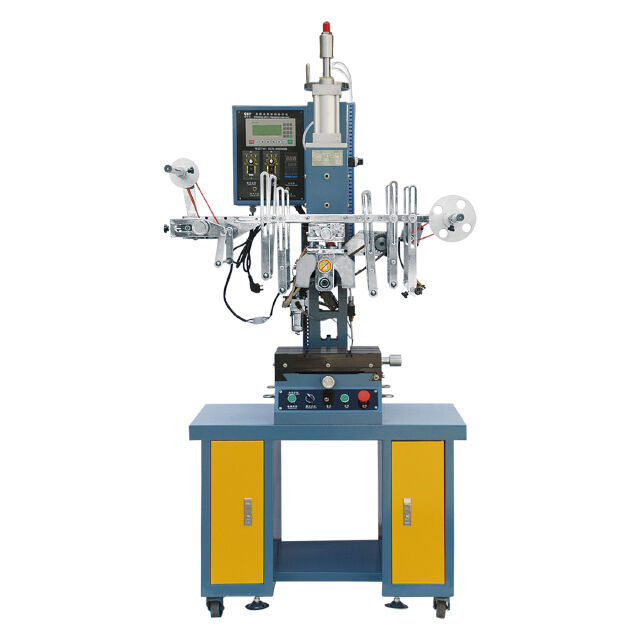
The manufacturing landscape is undergoing a profound transformation as consumer expectations shift from mass-produced uniformity to individualized expression. In this new economy, businesses across industries face mounting pressure to deliver customized products without sacrificing speed, quality, or profitability. Digital heat transfer film has emerged as a pivotal technology enabling this transition, offering manufacturers and decorators a practical pathway to serve niche markets, fulfill on-demand orders, and respond to the growing appetite for personalized goods. Unlike traditional screen printing or pad printing methods that require extensive setup, tooling investment, and minimum order quantities, digital heat transfer film technology allows for economically viable production runs as small as a single unit, fundamentally redefining what is possible in product decoration and branding.
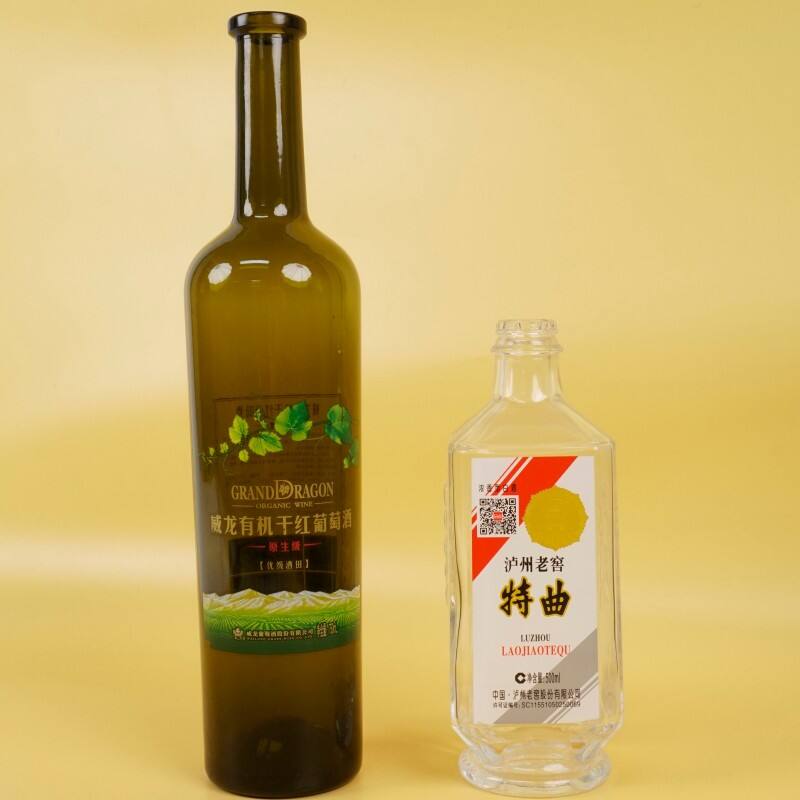
This evolution reflects deeper changes in consumer behavior and market dynamics. Today's buyers seek products that reflect their personal identity, values, and aesthetic preferences, whether purchasing promotional merchandise, sporting goods, home décor items, or everyday consumer products. The ability to economically produce small batches with high design complexity has become a competitive differentiator, particularly for businesses serving creative industries, corporate branding clients, and direct-to-consumer channels. Digital heat transfer film addresses these demands by combining design flexibility, material compatibility, production efficiency, and cost-effectiveness in ways that conventional decoration technologies struggle to match. Understanding how this technology enables the era of small-batch customization requires examining its operational advantages, market applications, technical capabilities, and strategic implications for businesses navigating the personalization economy.
Why Digital Heat Transfer Film Drives Small-Batch Economic Viability
Elimination of Traditional Setup Barriers
Conventional decoration methods such as screen printing impose significant barriers to small-batch production through their inherent setup requirements. Each design variation necessitates creation of physical screens, registration alignment, color separation processes, and test runs to achieve acceptable quality. These preparatory steps consume time, labor, and materials regardless of the final production quantity, creating a fixed cost structure that becomes prohibitively expensive when distributed across small order volumes. A single-unit custom order using traditional screen printing might carry setup costs representing ten to twenty times the actual material and labor value of the finished product, rendering such orders economically impractical for most commercial operations.
Digital heat transfer film fundamentally alters this economic equation by replacing physical setup processes with digital file preparation. Designs exist as electronic files that can be modified, scaled, and output without creating new tooling or reconfiguring production equipment. The transition from one design to another requires no physical changeover, no screen washing, no ink mixing, and no registration adjustment. This digital workflow means the first unit of a production run carries virtually the same unit cost as the hundredth unit, eliminating the punitive economics that traditionally made small-batch production unattractive. Businesses can now accept orders for quantities previously considered unviable, opening entirely new market segments and customer relationships that were structurally impossible under conventional manufacturing models.
Design Complexity Without Cost Penalty
Traditional printing methods impose direct cost relationships between design complexity and production expense. Multi-color designs require multiple screens, precise registration across color layers, and sequential printing operations that multiply both setup time and production cycle duration. Photographic images, gradient effects, and fine detail present technical challenges that often necessitate specialized equipment, expert operators, and quality control measures that further increase costs. These complexity penalties create strong economic pressure toward design simplification, limiting creative possibilities and reducing the differentiation potential that personalization promises to deliver.
The digital heat transfer film process treats design complexity as essentially cost-neutral. A simple single-color logo and a complex photographic image with continuous tone gradations require the same printing process, the same transfer procedure, and consume comparable material quantities. The digital printing equipment reproduces fine detail, color transitions, and intricate patterns without additional setup, tooling, or specialized handling. This characteristic enables businesses to offer genuine creative freedom to customers seeking personalized products, knowing that design complexity will not trigger disproportionate cost increases. The result is a marketplace where aesthetic ambition and budget constraint are decoupled, allowing personalization to achieve its full expressive potential.
Inventory Reduction and Production Flexibility
Traditional manufacturing economics favor large production runs that amortize fixed costs across maximum unit quantities, but this efficiency comes at the expense of inventory risk. Businesses must forecast demand, commit to production volumes, and warehouse finished goods or decorated components awaiting sale. Forecast errors result in either stockouts that lose sales opportunities or excess inventory that ties up working capital and may ultimately require discounting or disposal. This inventory burden becomes particularly acute in personalized product markets where design preferences shift rapidly and individual customer specifications cannot be predicted or aggregated into standard stock-keeping units.
Digital heat transfer film enables a produce-on-demand operational model that minimizes inventory exposure. Blank substrates can be held as generic inventory applicable across diverse customer orders, with decoration applied only after specific orders are received and confirmed. This just-in-time decoration approach reduces the working capital tied up in finished goods inventory, eliminates obsolescence risk from design changes or trend shifts, and allows businesses to operate with leaner inventory positions while maintaining rapid order fulfillment capability. The flexibility extends to product mix decisions, as production capacity can be dynamically allocated across different product categories, substrates, and customer segments without the commitment constraints inherent in traditional batch manufacturing strategies.
Technical Capabilities Enabling Personalization at Scale
Substrate Versatility and Material Compatibility
The personalization economy spans diverse product categories manufactured from varied materials, each presenting unique surface characteristics, thermal properties, and adhesion challenges. A decoration technology must accommodate this material diversity to serve broad market applications without requiring specialized variants or limiting substrate options. Digital heat transfer film has been engineered to bond effectively with numerous substrate types including plastics, coated metals, treated woods, and specialized composites common in consumer products, promotional items, and industrial goods. The film formulations are optimized to achieve reliable adhesion across materials with different surface energies, texture profiles, and thermal response characteristics.
This substrate versatility emerges from carefully balanced adhesive chemistry, carrier film design, and transfer parameters that can be adjusted to match specific material requirements. The heat-activated adhesive systems used in digital heat transfer film create molecular-level bonds with substrate surfaces during the transfer process, achieving permanent adhesion that withstands environmental exposure, handling stress, and cleaning procedures appropriate to the end-use application. Different film specifications address specific substrate families, allowing decorators to select appropriate film grades based on the substrate portfolio they serve. This material compatibility enables businesses to offer consistent decoration solutions across their entire product range, simplifying process management and ensuring quality consistency regardless of substrate variation.
Color Fidelity and Graphic Resolution
Personalization derives much of its value from accurate reproduction of customer-supplied artwork, brand identity elements, and photographic content. Color accuracy, tonal range, and detail resolution directly influence perceived quality and customer satisfaction, particularly in applications involving corporate branding, licensed imagery, or personal photographs. Digital heat transfer film technology leverages advanced digital printing systems capable of reproducing images with resolution exceeding three hundred dots per inch, delivering sharpness and detail clarity comparable to high-quality offset printing. Color management systems ensure consistent reproduction of brand colors, accurate skin tones in portraits, and faithful rendering of product photography across production runs.
The color gamut achievable with contemporary digital heat transfer film systems spans a broad spectrum through multi-channel ink configurations that may include extended color sets beyond standard cyan, magenta, yellow, and black. Additional ink channels for light cyan, light magenta, orange, or green expand the reproducible color space, enabling more accurate rendering of difficult colors such as vibrant oranges, deep purples, and neutral grays. This extended gamut capability is particularly valuable in personalization applications where customers expect precise color matching to existing brand standards or accurate representation of emotionally significant imagery. The combination of high resolution and broad color gamut positions digital heat transfer film as a premium decoration technology capable of meeting demanding quality standards in discerning market segments.
Production Speed and Throughput Efficiency
Small-batch customization remains economically viable only when production throughput maintains acceptable efficiency despite order fragmentation and design variability. A decoration technology must balance the flexibility required for customization with the productivity necessary to keep unit costs competitive and delivery timelines acceptable to customers. Digital heat transfer film achieves this balance through workflow optimization that minimizes non-productive time between orders while maintaining high material utilization and consistent quality output. Digital printing systems can gang multiple designs on a single film sheet, maximizing material utilization when processing batches of different custom orders simultaneously.
The transfer application process itself is rapid, typically requiring thermal press dwell times measured in seconds rather than minutes. Modern heat press equipment incorporates programmable temperature and pressure settings that can be quickly adjusted for different substrate types, and automated or semi-automated systems can achieve cycle times enabling hundreds of transfers per hour depending on part geometry and handling requirements. This throughput capacity means that even single-unit orders can be processed economically when aggregated with other orders in production queues. The combination of digital printing speed, efficient material utilization, and rapid transfer cycles creates a production system that scales effectively from individual personalized items to moderate batch quantities without fundamental process changes or efficiency penalties.
Market Applications Transforming Through Customization
Corporate Branding and Promotional Products
The promotional products industry has historically operated on minimum order quantity models that excluded small businesses and limited campaign flexibility for organizations seeking targeted, event-specific, or test-market promotional initiatives. Digital heat transfer film technology has democratized access to custom branded merchandise by enabling economically viable production of promotional items in quantities as small as dozens rather than thousands. Companies can now create customized promotional products for specific trade shows, regional marketing campaigns, employee recognition programs, or customer appreciation initiatives without committing to inventory levels that exceed realistic distribution needs or budget allocations.
This capability extends beyond quantity flexibility to encompass design personalization that increases recipient engagement and perceived value. Promotional items can incorporate recipient names, personalized messages, location-specific graphics, or variable data elements that create individual relevance rather than generic brand exposure. A corporate client might order water bottles decorated with digital heat transfer film bearing the company logo, the recipient's name, and a personalized message acknowledging specific achievements or milestones. This level of individualization transforms promotional products from commodity giveaways into meaningful recognition tools that strengthen relationships and enhance brand affinity. The technology enables promotional product distributors to offer differentiated services that command premium pricing while serving previously inaccessible market segments.
Sporting Goods and Team Apparel
Team sports organizations, recreational leagues, and scholastic athletic programs require decorated apparel and equipment that combines team identity with individual player identification. Traditional decoration approaches required substantial minimum orders that forced teams to over-purchase or limit personalization to numbers rather than names. Digital heat transfer film has transformed this market by enabling full roster customization in any quantity, allowing even small teams or recreational groups to obtain professionally decorated gear with individual player names, positions, and numbers without minimum order constraints or setup fees that previously made such customization prohibitively expensive.
The technology particularly serves the growing market for individual athletic equipment personalization, where consumers seek to add personal identity to items such as water bottles, equipment bags, protective gear, and training accessories. Athletes at all competitive levels increasingly value equipment that reflects personal style and identity, creating demand for decoration services that can economically handle single-item orders with complex graphics and high-quality finish. Digital heat transfer film enables specialty retailers and team dealers to offer these personalization services as value-added profit centers, differentiating their offerings from mass-market competitors while building customer loyalty through customization capabilities that extend beyond initial product purchase to ongoing personalization services.
Consumer Products and Retail Customization
The direct-to-consumer retail environment increasingly features customization options that allow buyers to personalize products during the purchase process, creating unique items that reflect individual preferences and taste. This trend spans categories from drinkware and home décor to personal accessories and gift items, with consumers demonstrating willingness to pay premium prices for personalized versions of standard products. Digital heat transfer film technology provides the production backbone for these retail customization programs, enabling in-store or online configuration tools that translate customer design choices into production-ready files for immediate or rapid manufacturing.
Retailers implementing customization programs using digital heat transfer film can operate with minimal finished goods inventory, instead holding blank substrate inventory that becomes differentiated only upon order receipt. This inventory model reduces capital requirements, eliminates obsolescence risk from seasonal design changes, and allows retailers to offer virtually unlimited design options without corresponding inventory complexity. The production process can be executed in retail locations for immediate customer pickup, in regional production facilities for next-day delivery, or in centralized manufacturing operations for broader distribution networks. This operational flexibility allows retailers to match production location strategy to their specific business model, customer expectations, and competitive positioning while leveraging the same underlying decoration technology.
Strategic Implementation Considerations for Business Adoption
Workflow Integration and Process Design
Successfully implementing digital heat transfer film technology requires thoughtful integration with existing business processes, order management systems, and production workflows. Businesses must establish efficient pathways for customer design submission, file preparation, production scheduling, quality control, and fulfillment that minimize manual touchpoints and potential error introduction. Digital workflow automation becomes critical when processing numerous small orders with unique specifications, as manual handling of each order quickly consumes labor hours and introduces opportunities for errors that damage customer satisfaction and increase operational costs.
Effective implementation typically involves investing in order management software that can accept customer design files, perform automated preflight checking to identify resolution or format issues, route approved designs to digital printing systems, and track work-in-process through transfer application and finishing operations. Integration with enterprise resource planning systems ensures accurate inventory tracking of blank substrates and film materials, enables realistic production scheduling based on equipment capacity, and supports financial management through accurate job costing and margin analysis. Companies achieving superior results from digital heat transfer film adoption typically treat the technology not as an isolated production tool but as a component within a comprehensive digital manufacturing ecosystem designed to maximize efficiency, quality, and customer responsiveness across the entire order-to-delivery cycle.
Capacity Planning and Equipment Selection
The decision to adopt digital heat transfer film technology involves equipment investment choices that will significantly influence operational capability, production economics, and market positioning. Businesses must assess expected order volumes, design complexity requirements, substrate types they will serve, and desired production throughput to select appropriate printing equipment, heat press systems, and ancillary handling equipment. Digital printing technology spans a wide capability and price range from desktop systems suitable for occasional low-volume production to industrial platforms capable of continuous high-volume operation with advanced color management and automated material handling.
Heat press equipment selection similarly requires matching press size, heating technology, pressure delivery system, and control sophistication to anticipated application requirements. Small businesses serving primarily flat substrates may operate effectively with manual clam-shell or swing-away presses, while higher-volume operations or those decorating complex three-dimensional parts may require pneumatic or hydraulic presses with programmable multi-zone heating and automated cycling. Equipment acquisition decisions should incorporate consideration of future growth expectations and market expansion opportunities, as selecting undersized equipment may create bottlenecks that limit business growth, while over-investing in capacity that exceeds near-term demand can strain financial resources and delay return on investment. Strategic equipment selection balances current operational requirements with reasonable growth projections and maintains flexibility to adapt as market opportunities evolve.
Quality Management and Consistency Standards
Operating a successful customization business using digital heat transfer film demands rigorous quality management that ensures consistent results across diverse substrates, varying designs, and different production personnel. Quality failures in customized products carry particularly severe consequences because defective items cannot be simply replaced from inventory but must be completely reproduced, consuming additional materials, labor, and time while delaying customer delivery and potentially damaging reputation. Establishing robust quality control procedures that catch defects before customer shipment is essential to maintaining profitability and customer satisfaction in personalization operations.
Effective quality management begins with standardized process parameters for film printing, transfer temperature and pressure settings, and dwell time specifications matched to different substrate types. These standards should be documented, validated through testing, and enforced through training and process monitoring. Visual inspection protocols should verify print quality, color accuracy, registration precision, and design completeness before transfer application. Post-transfer inspection should confirm complete adhesion, absence of defects such as bubbles or wrinkles, and durability of the finished decoration through appropriate testing such as tape adhesion tests or simulated wear procedures. Digital heat transfer film quality is highly process-dependent, meaning that maintaining consistent results requires disciplined adherence to validated procedures rather than relying on operator judgment or informal practices that introduce uncontrolled variation.
Future Trajectory and Evolving Capabilities
Technology Advancement and Performance Enhancement
Ongoing development in digital printing technology, film chemistry, and transfer processes continues to expand the capabilities and improve the economics of digital heat transfer film applications. Advances in printhead technology, ink formulation, and color management are delivering higher resolution, broader color gamut, and improved ink efficiency that reduce per-unit material costs while enhancing output quality. New film formulations are extending substrate compatibility to previously challenging materials, improving environmental resistance for demanding applications, and reducing transfer temperatures to accommodate heat-sensitive substrates that previously required alternative decoration methods.
Automation integration represents another significant development trajectory, with manufacturers introducing systems that streamline the transfer application process through automated part loading, precise positioning, and consistent pressure application. These automated systems reduce labor requirements, improve process repeatability, and increase throughput capacity, making digital heat transfer film economically competitive in higher-volume applications that previously favored traditional methods. The convergence of improved materials, enhanced printing technology, and increased automation is progressively expanding the application envelope for digital heat transfer film, enabling entry into market segments and use cases that were technically or economically impractical with earlier generation systems. This ongoing evolution suggests that the role of digital heat transfer film in enabling personalization and small-batch production will continue expanding as technology capabilities advance.
Market Evolution and Business Model Innovation
The availability of economically viable small-batch decoration through digital heat transfer film is catalyzing new business models that were structurally impossible under traditional manufacturing constraints. Online platforms are emerging that allow consumers to design personalized products through browser-based tools, with orders automatically routed to distributed production networks using digital heat transfer film for decoration. These platforms aggregate individual consumer orders to achieve production efficiency while maintaining complete design individualization, creating scalable businesses built on mass customization principles that generate profitability through volume aggregation rather than unit margins.
Traditional manufacturers and retailers are increasingly incorporating customization as a value-added service that differentiates their offerings and creates switching costs that enhance customer retention. Rather than competing primarily on price for commodity products, these businesses leverage digital heat transfer film capabilities to offer personalization that commands premium pricing and builds stronger customer relationships. The technology enables micro-segmentation strategies where products are tailored to specific demographic groups, geographic markets, or interest communities at batch sizes that make such targeting economically rational. This market evolution reflects a broader shift from mass production economics toward flexible manufacturing models that treat variation as opportunity rather than cost, with digital heat transfer film serving as an enabling technology making this transition practical across numerous industries and product categories.
FAQ
What minimum order quantity is required for digital heat transfer film decoration?
Digital heat transfer film technology imposes no inherent minimum order quantity, making it economically viable to produce single custom items. Unlike screen printing or pad printing that require setup processes amortized across production volumes, digital heat transfer film operates on a per-unit cost model where each additional piece adds only incremental material and labor expense. Individual businesses may establish their own minimum order policies based on administrative handling costs, but the technology itself supports one-off production as readily as larger batches. This zero-minimum characteristic fundamentally enables the personalization economy by making custom decoration accessible to individual consumers and small businesses previously excluded by traditional minimum quantity requirements.
How does digital heat transfer film durability compare to screen printing or direct printing methods?
When properly applied using appropriate film specifications and validated transfer parameters, digital heat transfer film achieves excellent durability comparable to or exceeding alternative decoration methods for many applications. The thermal bonding process creates molecular-level adhesion between the film and substrate that resists peeling, cracking, or delamination under normal use conditions. Specific durability characteristics depend on film formulation, substrate material, application environment, and care procedures, but properly selected digital heat transfer film systems routinely pass rigorous testing including dishwasher exposure, outdoor weathering, abrasion resistance, and chemical contact appropriate to their intended use. Some applications may favor direct printing or other methods based on specific performance requirements, but digital heat transfer film should not be dismissed as inherently less durable—it simply represents a different technological approach with its own performance profile that excels in particular application contexts.
Can digital heat transfer film reproduce photographic images and complex graphics with acceptable quality?
Contemporary digital heat transfer film systems are fully capable of reproducing photographic images, continuous tone graphics, and complex artwork with exceptional quality that meets professional standards for commercial products and branded merchandise. Modern digital printing technology used to create the film transfers operates at resolutions exceeding 300 DPI with color management systems that ensure accurate reproduction and consistent output. The film substrates are engineered to accept ink without bleeding or dot gain that would compromise detail, and the transfer process preserves the printed image fidelity during application to the final substrate. Businesses regularly use digital heat transfer film to decorate products with customer-supplied photographs, licensed artwork, detailed logos incorporating fine text, and complex graphics that would be difficult or impossible to reproduce using conventional screen printing methods. The image quality capability is a key factor enabling personalization applications where accurate reproduction of meaningful imagery creates the emotional value that justifies premium pricing.
What infrastructure investment is required to establish digital heat transfer film production capability?
Establishing digital heat transfer film production capability requires investment in digital printing equipment, heat press systems, and supporting workflow infrastructure scaled to anticipated production volume and application requirements. Entry-level operations can begin with desktop digital printers and manual heat presses representing total equipment investment in the range of several thousand dollars, suitable for occasional production or testing market demand before committing to larger-scale operations. Commercial production serving regular customer orders typically requires industrial digital printing systems with higher speed, larger format capacity, and superior color management, combined with pneumatic or hydraulic heat presses offering consistent pressure, precise temperature control, and higher throughput—total investment potentially reaching mid-five to low-six figures depending on capability level selected. Beyond equipment, businesses should budget for design software, color management tools, order management systems, training, and initial material inventory to support operational launch and ensure quality output from the beginning.
Table of Contents
- Why Digital Heat Transfer Film Drives Small-Batch Economic Viability
- Technical Capabilities Enabling Personalization at Scale
- Market Applications Transforming Through Customization
- Strategic Implementation Considerations for Business Adoption
- Future Trajectory and Evolving Capabilities
-
FAQ
- What minimum order quantity is required for digital heat transfer film decoration?
- How does digital heat transfer film durability compare to screen printing or direct printing methods?
- Can digital heat transfer film reproduce photographic images and complex graphics with acceptable quality?
- What infrastructure investment is required to establish digital heat transfer film production capability?