 EN
EN



The industrial landscape is undergoing a transformative shift as manufacturers seek production equipment that combines intelligence, energy efficiency, and operational simplicity. Heat transfer machines, which have long been essential for applying graphics and designs to curved surfaces, textiles, and various substrates, are at the forefront of this evolution. The future of heat transfer machines promises unprecedented levels of automation, precision control, and user accessibility that will fundamentally change how businesses approach decorated product manufacturing.
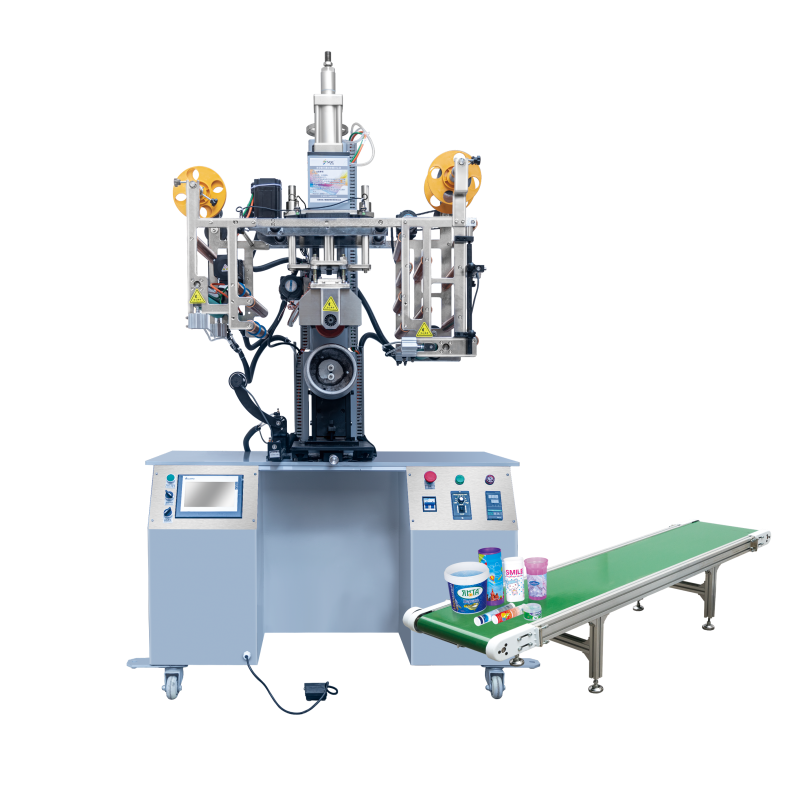
As we look toward the coming years, three defining characteristics emerge as the pillars of next-generation heat transfer machines: enhanced intelligence through digital integration, substantial improvements in energy efficiency and resource utilization, and dramatically simplified operation that reduces the skill barrier for operators. These advancements are not merely incremental improvements but represent a fundamental reimagining of how heat transfer technology can serve modern manufacturing needs. Understanding these evolutionary trends is critical for businesses planning capital investments and seeking competitive advantages in decorated product markets.
Intelligence Revolution in Heat Transfer Technology
Advanced Sensor Integration and Real-Time Monitoring
The next generation of heat transfer machines incorporates sophisticated sensor networks that continuously monitor critical process parameters. Temperature sensors with precision down to single-degree accuracy ensure uniform heat distribution across the transfer surface, while pressure sensors verify consistent application force throughout the bonding cycle. These intelligent systems collect data points hundreds of times per second, creating a comprehensive digital record of each transfer operation that enables quality assurance and process optimization.
Real-time monitoring capabilities transform how operators interact with heat transfer machines. Digital displays provide instant feedback on temperature curves, pressure profiles, and timing sequences, allowing immediate adjustments when deviations occur. Advanced systems can detect substrate variations and automatically compensate by adjusting parameters, ensuring consistent results even when working with materials that have slight thickness or composition differences. This level of intelligence reduces waste, improves first-pass quality rates, and minimizes the expertise required for successful operation.
Predictive maintenance algorithms represent another frontier in intelligent heat transfer machines. By analyzing operational data patterns, these systems can forecast component wear, heating element degradation, and potential failure points before they impact production. Manufacturers receive advance warnings about maintenance needs, allowing scheduled interventions during planned downtime rather than unexpected breakdowns that halt production lines. This predictive capability significantly improves overall equipment effectiveness and reduces total cost of ownership.
Software-Driven Process Control and Recipe Management
Modern heat transfer machines increasingly rely on sophisticated software platforms that manage entire transfer processes through digital recipe systems. Operators can create, store, and recall hundreds of different process profiles optimized for specific substrate materials, film types, and graphic requirements. Each recipe contains precisely calibrated parameters for temperature ramp rates, dwell times, cooling sequences, and pressure application patterns, eliminating guesswork and ensuring repeatability across production shifts.
These software systems often feature intuitive touchscreen interfaces that guide operators through setup procedures with visual prompts and step-by-step instructions. New operators can achieve professional results quickly by following digital workflows, while experienced technicians can fine-tune parameters with granular control. The ability to instantly switch between different production recipes enables manufacturers to handle diverse product portfolios without lengthy changeover procedures or complex manual adjustments.
Cloud connectivity is becoming standard in forward-looking heat transfer machines, enabling remote monitoring, centralized recipe management across multiple production sites, and integration with enterprise resource planning systems. Production managers can track equipment utilization, quality metrics, and throughput statistics from any location, making data-driven decisions about capacity planning and process improvements. This connectivity also facilitates manufacturer support, allowing technical experts to diagnose issues remotely and provide solutions without on-site visits.
Artificial Intelligence and Machine Learning Applications
Emerging heat transfer machines incorporate artificial intelligence algorithms that learn from production data to continuously optimize process parameters. These systems analyze thousands of completed transfers to identify patterns between input variables and quality outcomes, gradually refining recipes to maximize adhesion quality while minimizing cycle times and energy consumption. Machine learning models can detect subtle correlations that human operators might miss, discovering optimal parameter combinations that exceed baseline manufacturer recommendations.
Quality inspection is another area where AI enhances heat transfer machines. Integrated vision systems examine completed transfers for defects such as incomplete adhesion, air bubbles, wrinkles, or misalignment. Advanced image recognition algorithms can distinguish between acceptable cosmetic variations and true quality defects, reducing false rejections while ensuring defective products never reach customers. Some systems automatically adjust subsequent transfer parameters when patterns of minor defects are detected, implementing corrective actions before quality issues escalate.
The convergence of heat transfer machines with industrial Internet of Things ecosystems creates opportunities for factory-wide optimization. These machines communicate with material handling systems, curing ovens, and packaging equipment to coordinate workflows and eliminate bottlenecks. Predictive algorithms schedule preventive maintenance windows based on production forecasts, ensuring equipment availability aligns with demand peaks. This level of integration transforms individual machines into intelligent nodes within smart manufacturing environments.
Energy Efficiency and Environmental Sustainability
Advanced Heating Technologies and Thermal Management
Energy consumption has become a critical consideration in industrial equipment selection, and future heat transfer machines address this concern through revolutionary heating technologies. Induction heating systems replace traditional resistance elements in some applications, delivering faster temperature ramp rates with significantly lower energy input. These systems heat only the transfer surface and substrate, avoiding energy waste associated with heating surrounding air and machine components. The result is cycle time reductions of twenty to thirty percent coupled with energy savings of similar magnitude.
Infrared heating elements represent another efficiency advancement in modern heat transfer machines. These systems emit energy in specific wavelengths optimized for absorption by transfer films and substrate materials, maximizing energy transfer efficiency while minimizing wasted heat. Zoned heating configurations allow independent control of multiple heating sections, applying energy precisely where needed rather than heating entire platens uniformly. This targeted approach reduces overall power consumption while improving temperature uniformity across complex substrate geometries.
Thermal insulation improvements contribute significantly to energy efficiency in next-generation heat transfer machines. Advanced insulation materials with superior thermal resistance properties minimize heat loss to the surrounding environment, ensuring more energy reaches the transfer interface. Vacuum insulation panels and aerogel materials maintain heat within the working zone, reducing the continuous power input required to maintain operating temperatures. These enhancements are particularly beneficial in high-volume production environments where machines operate continuously for extended periods.
Heat Recovery and Resource Conservation
Innovative heat transfer machines increasingly incorporate thermal energy recovery systems that capture waste heat for beneficial reuse. Cooling phases that follow transfer operations release substantial thermal energy that traditionally dissipates unused into factory environments. Advanced systems channel this heat through heat exchangers that warm incoming substrates or preheat other equipment, converting waste into useful energy. In facilities with multiple heat transfer machines, interconnected thermal management systems can balance heating and cooling loads across equipment, optimizing overall energy utilization.
Water consumption is another sustainability consideration addressed in modern heat transfer machines. Older cooling systems relied on continuous water flow for temperature regulation, consuming significant resources and creating disposal challenges. Contemporary designs utilize closed-loop cooling with refrigeration systems or air cooling with high-efficiency fans, eliminating water consumption entirely in many applications. Where water cooling remains necessary, recirculation systems with efficient heat exchangers minimize consumption to small makeup volumes that replace evaporation losses.
Material efficiency improvements extend the sustainability benefits of advanced heat transfer machines. Precise temperature and pressure control reduces the percentage of transfers that fail quality standards, decreasing waste of both substrates and transfer films. Faster cycle times enabled by efficient heating increase throughput per unit of energy consumed, improving the environmental footprint per finished product. These cumulative improvements align manufacturing operations with corporate sustainability goals while reducing operational costs.
Intelligent Energy Management Systems
Smart power management capabilities distinguish future heat transfer machines from legacy equipment. These systems monitor energy consumption in real-time and optimize power delivery based on production schedules and operational phases. During idle periods, intelligent machines enter low-power standby modes that maintain minimal temperatures for quick restart while consuming a fraction of full operational power. Predictive scheduling algorithms anticipate production demands and initiate heating sequences timed to reach operating temperature precisely when needed, avoiding extended warm-up periods.
Demand response integration allows progressive heat transfer machines to participate in utility load management programs. These systems can temporarily reduce non-critical power consumption during peak demand periods when electricity costs are highest, or they can shift energy-intensive operations to off-peak hours when rates are lower. This flexibility provides direct cost savings while supporting grid stability, particularly in regions with time-of-use electricity pricing or demand charge structures.
Comprehensive energy analytics help manufacturers understand and optimize their heat transfer machine power consumption patterns. Detailed reporting breaks down energy usage by production phase, identifies opportunities for efficiency improvements, and tracks savings achieved through process optimization. These insights enable continuous improvement initiatives that progressively reduce the environmental and economic costs of heat transfer operations while maintaining or improving production output and quality standards.
Operational Simplicity and Enhanced User Experience
Intuitive Interface Design and Operator Guidance
The complexity that once characterized heat transfer machines is giving way to user-centric design philosophies that prioritize operational simplicity. Large color touchscreen interfaces replace arrays of mechanical switches and analog controls, presenting operators with clear visual representations of machine status and process parameters. Icon-based navigation systems organized by logical workflow sequences enable operators to configure and initiate transfers through guided procedures that eliminate confusion and reduce training requirements.
Context-sensitive help systems embedded within heat transfer machines provide instant guidance when operators encounter unfamiliar situations or need clarification about specific functions. Interactive tutorials walk new users through setup procedures with animated demonstrations and step-by-step instructions. Troubleshooting wizards diagnose common issues and recommend corrective actions, empowering operators to resolve minor problems without waiting for technical support. This built-in knowledge base accelerates operator proficiency and reduces dependence on specialized expertise.
Multilingual support expands the accessibility of modern heat transfer machines across global manufacturing operations. Operators can select their preferred language from comprehensive options, ensuring they interact with the system in their native tongue. This localization extends beyond simple text translation to include culturally appropriate terminology and measurement units, creating comfortable operating environments regardless of geographic location. The elimination of language barriers improves safety, quality, and operator confidence.
Automated Setup and Reduced Manual Adjustments
Manual positioning and adjustment requirements have traditionally consumed significant setup time and introduced opportunities for operator error in heat transfer machines. Next-generation equipment incorporates motorized positioning systems that automatically configure machine geometry based on substrate dimensions entered into control systems. Operators simply input workpiece specifications, and the machine adjusts platen spacing, pressure application points, and heating zones without manual measurement or mechanical manipulation.
Automatic film tensioning systems maintain optimal transfer film positioning throughout production runs without operator intervention. Sensors monitor film alignment and tension, with servo-driven adjustment mechanisms making continuous micro-corrections that prevent wrinkles, misalignment, and adhesion defects. This automation eliminates a traditional skill-intensive aspect of heat transfer operations, allowing less-experienced operators to achieve results previously requiring veteran technicians.
Quick-change tooling systems dramatically reduce the time required to reconfigure heat transfer machines for different products. Modular platen designs with standardized mounting interfaces enable tool changes in minutes rather than hours, with automatic recognition systems identifying installed tooling and loading appropriate process parameters. This capability supports agile manufacturing strategies that accommodate frequent product changeovers and small batch production without productivity penalties.
Safety Enhancement and Error Prevention
Safety has always been paramount in heat transfer machines due to the presence of high temperatures and mechanical forces, but future designs incorporate comprehensive safeguards that protect operators while simplifying safe operation. Intelligent interlocks prevent machine operation when guards are open or safety conditions are not satisfied, eliminating reliance on operator vigilance to avoid dangerous situations. Light curtains and proximity sensors detect operator presence in hazardous zones and immediately halt machine motion, providing non-intrusive protection that does not impede normal workflow.
Thermal safety systems prevent burn injuries through multiple protection layers. Cool-touch external surfaces remain safe even when internal components reach transfer temperatures, while automatic cooling sequences ensure platens reach safe temperatures before access is permitted. Visual and audible warnings alert operators to hot surfaces, with color-coded indicators clearly communicating temperature status. Emergency stop controls are prominently positioned and immediately accessible from all operator positions.
Error-proofing features built into advanced heat transfer machines prevent common mistakes that compromise quality or damage equipment. Systems verify that substrates are properly positioned before allowing cycle initiation, preventing incomplete transfers or platen contact with incorrect surfaces. Parameter limits prevent operators from entering values outside safe or effective ranges, guarding against both equipment damage and quality defects. These preventive measures reduce training requirements while improving operational safety and product consistency.
Integration Capabilities and Production Ecosystem Compatibility
Seamless Connection with Manufacturing Execution Systems
Modern heat transfer machines function as integrated components within broader manufacturing ecosystems rather than isolated production tools. Direct connectivity with manufacturing execution systems enables real-time production tracking, with each completed transfer automatically recorded in enterprise databases. This integration provides complete traceability, linking finished products to specific process parameters, operator identifications, material lot numbers, and quality inspection results. Manufacturers gain comprehensive documentation that supports quality certifications and regulatory compliance requirements.
Work order management through connected systems eliminates manual job setup and reduces the potential for production errors. When operators scan work order barcodes or select jobs from digital queues, heat transfer machines automatically load appropriate process recipes and configure machine settings. Production quantities, substrate specifications, and design files flow directly from enterprise systems to equipment controllers, ensuring correct configuration without manual parameter entry. This integration accelerates job changeovers and ensures manufacturing operations precisely execute engineering specifications.
Performance analytics derived from connected heat transfer machines inform continuous improvement initiatives and capacity planning decisions. Production managers access real-time dashboards displaying throughput rates, quality metrics, utilization percentages, and efficiency trends across equipment fleets. Historical data analysis reveals patterns that guide preventive maintenance scheduling, operator training focus areas, and process optimization opportunities. These insights transform reactive management approaches into proactive strategies that maximize equipment return on investment.
Material Handling System Coordination
The efficiency advantages of automated material handling extend to heat transfer machines through coordinated system integration. Robotic loading systems retrieve substrates from staging areas and position them precisely within transfer fixtures, eliminating manual handling that consumes time and introduces positioning variability. Vision-guided systems verify correct substrate orientation and detect defects before transfer operations commence, preventing waste of films and machine cycles on unacceptable parts.
Conveyor systems synchronized with heat transfer machines create continuous flow production lines that maximize throughput while minimizing work-in-process inventory. Substrates move automatically from preparation stations through transfer operations to cooling zones and subsequent processing steps without manual intervention. Buffer zones with accumulation conveyors accommodate speed variations between production stages, preventing bottlenecks while maintaining smooth material flow. This integration approach particularly benefits high-volume applications where labor efficiency and production velocity are critical competitive factors.
Automated unloading and sorting systems complete the integration picture, removing finished transfers from heat transfer machines and directing them to appropriate downstream destinations based on quality results or product types. Reject systems automatically divert defective transfers to waste streams, while acceptable products proceed to packaging or further processing. This end-to-end automation reduces labor requirements, improves throughput consistency, and supports lights-out manufacturing capabilities where heat transfer machines operate with minimal human supervision.
Digital Twin Technology and Virtual Commissioning
Cutting-edge heat transfer machines leverage digital twin technology that creates virtual replicas of physical equipment within simulation environments. These digital models accurately represent machine behavior, allowing process engineers to test parameter adjustments, evaluate new product introductions, and optimize workflows without consuming production time or materials. Virtual experiments identify optimal settings that are then deployed to physical equipment with confidence, accelerating process development while reducing trial-and-error experimentation.
Virtual commissioning capabilities enabled by digital twins dramatically reduce the time and cost associated with installing new heat transfer machines or reconfiguring existing equipment. Engineers program control systems, test interlocks, and debug automated sequences within simulation environments before equipment arrives at production facilities. This preparation ensures that physical installation proceeds smoothly with minimal startup issues, reducing the period between equipment delivery and full production capability.
Ongoing synchronization between physical heat transfer machines and their digital twins creates powerful analytical capabilities. Real-world performance data continuously updates virtual models, improving their accuracy and predictive value. Engineers can replay production scenarios to investigate quality issues or efficiency opportunities, comparing actual results against ideal performance predicted by simulations. This approach supports sophisticated process optimization that considers complex interactions between multiple variables, achieving performance levels difficult to reach through conventional optimization methods.
Market Implications and Strategic Considerations
Investment Justification and Return Analysis
The advanced capabilities of next-generation heat transfer machines command premium acquisition costs compared to basic equipment, requiring careful economic analysis to justify investments. However, comprehensive return calculations reveal compelling value propositions when considering total cost of ownership rather than purchase price alone. Energy efficiency improvements generate ongoing operational savings that accumulate substantially over equipment lifespans, while quality improvements reduce material waste and rework costs. Labor efficiency gains from simplified operation reduce per-unit production costs, particularly in regions with high wage rates.
Increased production capacity enabled by faster cycle times and reduced changeover duration allows manufacturers to serve larger markets or accept additional business without proportional capital expansion. The ability to efficiently handle diverse product portfolios with quick recipe changes supports business models based on customization and rapid response to market trends. These revenue-side benefits often exceed cost savings in strategic value, positioning manufacturers for growth rather than merely preserving existing margins.
Risk mitigation represents another dimension of investment value in sophisticated heat transfer machines. Predictive maintenance capabilities reduce unplanned downtime that creates delivery failures and customer dissatisfaction. Quality consistency improvements protect brand reputation by ensuring decorated products meet appearance standards. Compliance documentation features support regulatory requirements and customer audits, avoiding penalties and preserving market access. These risk-related benefits, while difficult to quantify precisely, contribute materially to investment returns.
Competitive Differentiation Through Technology Adoption
Early adoption of advanced heat transfer machines creates competitive advantages that extend beyond operational efficiency. The ability to offer shorter lead times enabled by quick changeovers and higher throughput attracts customers seeking responsive suppliers. Superior quality consistency builds reputation advantages that command premium pricing or preferential supplier status with quality-focused buyers. Energy efficiency credentials support corporate sustainability initiatives and appeal to environmentally conscious customers who evaluate supplier practices.
Technical capabilities of modern heat transfer machines enable manufacturers to address applications previously considered impractical or uneconomical. Complex three-dimensional substrates that challenged conventional equipment become viable with automated positioning and pressure control. Demanding material combinations requiring precise thermal profiles become accessible with advanced temperature management. These expanded capabilities open new market segments and diversify revenue streams, reducing dependence on mature commodity markets.
The data generated by intelligent heat transfer machines becomes a strategic asset that informs product development and market strategy. Production analytics reveal which product categories generate highest margins, which customer specifications create operational challenges, and where process improvements deliver greatest impact. This insight supports informed decision-making about market positioning, capacity investment, and continuous improvement priorities, creating advantages beyond the immediate production benefits of advanced equipment.
Workforce Implications and Skills Evolution
The simplification of heat transfer machines operation has profound implications for workforce planning and skills requirements. Manufacturers can more readily train new operators to competency levels previously requiring extensive experience, addressing labor shortages and reducing dependence on scarce specialized technicians. This accessibility expands the potential labor pool and supports workforce diversity initiatives by lowering barriers to entry for heat transfer operations careers.
However, the sophistication of modern heat transfer machines creates new skill requirements around digital systems, data analysis, and process optimization. Maintenance technicians need software troubleshooting capabilities alongside traditional mechanical and electrical skills. Process engineers benefit from understanding machine learning principles and digital twin applications. Organizations must evolve training programs to develop these competencies, either through internal development or partnerships with equipment manufacturers and technical institutions.
The changing nature of operator roles from manual equipment controllers to process supervisors managing intelligent systems affects workforce satisfaction and retention. Many operators appreciate the reduction in physical demands and repetitive manual adjustments, while the increased cognitive engagement and problem-solving opportunities enhance job satisfaction. Forward-thinking manufacturers leverage these changes to create more rewarding careers that attract and retain talented individuals, building sustainable competitive advantages through human capital development.
FAQ
What are the primary drivers behind the evolution toward smarter heat transfer machines?
The evolution is driven by multiple converging factors including manufacturing labor shortages that necessitate equipment requiring less specialized skills, increasing energy costs that make efficiency improvements economically compelling, and competitive pressures demanding higher quality consistency and faster response to market demands. Additionally, technological advances in sensors, computing power, and connectivity have made sophisticated control systems economically feasible for industrial equipment, enabling capabilities previously limited to specialized applications to become mainstream features in heat transfer machines.
How do the efficiency improvements in modern heat transfer machines translate into actual cost savings?
Efficiency improvements generate savings through multiple mechanisms that accumulate substantially over equipment operating lifespans. Energy consumption reductions of twenty to thirty percent directly decrease utility costs, with annual savings often reaching thousands of dollars for equipment operating multiple shifts. Faster cycle times increase throughput without additional labor, reducing per-unit production costs while enabling manufacturers to serve larger markets with existing equipment. Quality improvements decrease material waste and eliminate rework, saving both direct material costs and the labor associated with handling defective products. Comprehensive analysis considering all these factors typically reveals payback periods of two to four years for efficiency-focused equipment upgrades.
Can existing heat transfer machines be upgraded to incorporate smart features, or do manufacturers need entirely new equipment?
The upgrade potential varies significantly depending on the age and design of existing heat transfer machines. Modern equipment with electronic controls can often receive substantial capability enhancements through software updates and retrofit packages that add sensors, improved control systems, and connectivity features at costs well below new equipment acquisition. However, older machines with mechanical or analog controls typically cannot be economically upgraded to incorporate advanced intelligence and automation features, as the costs of replacing control systems and adding necessary sensors approach or exceed new equipment investment. Manufacturers should consult with equipment suppliers to evaluate specific upgrade possibilities based on their particular machines and desired capabilities.
What ongoing maintenance requirements do sophisticated heat transfer machines have compared to simpler equipment?
While advanced heat transfer machines incorporate more electronic and software components, their overall maintenance requirements often decrease compared to simpler equipment due to predictive maintenance capabilities and reduced mechanical complexity. Automated systems with fewer manual adjustments experience less wear from handling and misadjustment, extending component life. Predictive monitoring identifies developing issues before failures occur, allowing planned interventions rather than emergency repairs. However, maintenance personnel need different skills emphasizing software diagnostics and electronic troubleshooting alongside traditional mechanical abilities. Most manufacturers find that total maintenance costs decrease with advanced equipment despite the need for somewhat different technical capabilities in maintenance staff.
Table of Contents
- Intelligence Revolution in Heat Transfer Technology
- Energy Efficiency and Environmental Sustainability
- Operational Simplicity and Enhanced User Experience
- Integration Capabilities and Production Ecosystem Compatibility
- Market Implications and Strategic Considerations
-
FAQ
- What are the primary drivers behind the evolution toward smarter heat transfer machines?
- How do the efficiency improvements in modern heat transfer machines translate into actual cost savings?
- Can existing heat transfer machines be upgraded to incorporate smart features, or do manufacturers need entirely new equipment?
- What ongoing maintenance requirements do sophisticated heat transfer machines have compared to simpler equipment?